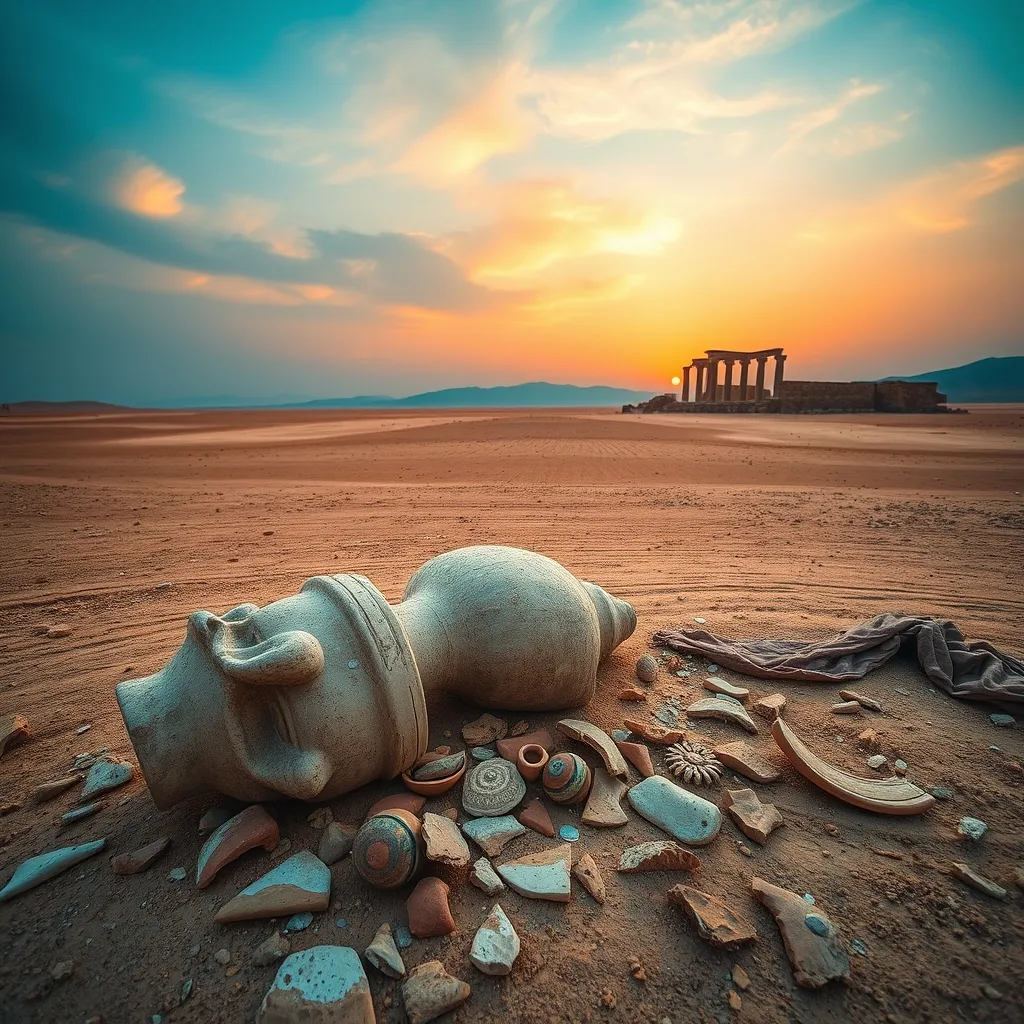
How Ancient Trade Routes Created the First Global Supply Chain Monopolies—And Why They Always Collapse

The short answer: Ancient empires like Rome, Venice, and the Arab Caliphates didn't just participate in trade—they weaponized geographic choke points along routes like the Silk Road to extract monopoly profits, tax every transaction, and eliminate competitors, but these monopolies always collapsed when new routes, cheaper alternatives, or technological disruption made their control worthless.
How Ancient Trade Routes Created the First Global Supply Chain Monopolies—And Why They Always Collapse
When we think of the Silk Road, we imagine free merchants wandering across deserts and mountains, exchanging goods in a vast, open marketplace. The reality was far darker: controlled by empires, taxed at every step, and ruthlessly protected by military force. The Silk Road wasn't global commerce—it was the world's first supply chain monopoly, built on control, violence, and the strategic capture of chokepoints.
And like all monopolies, it eventually fell apart.
The story of ancient trade route monopolies reveals something crucial about modern business: control over a critical pathway looks eternal until it doesn't. Understanding how and why these empires built—and lost—their dominance offers lessons for anyone watching today's tech giants, logistics networks, and digital platforms consolidate power.
What exactly was a supply chain monopoly in the ancient world?
A supply chain monopoly was a empire's deliberate control over a geographical chokepoint—a desert crossing, a strait, a mountain pass—that made it impossible for merchants to bypass their taxation, tolls, and regulations. Unlike modern monopolies built on patents or brand power, ancient monopolies were purely geographic. If you wanted to trade silk from China to Rome, you had to go through Persian-controlled territory. If you wanted spices from the Indian Ocean, you navigated Arab-controlled ports.
Venice's dominance of Mediterranean trade in the 10th-15th centuries is perhaps the clearest example. The Venetian Republic controlled the Strait of Otranto and had exclusive agreements with Byzantine and Arab ports. A merchant couldn't ship goods from Alexandria to Western Europe without Venetian intermediaries—and without paying Venetian taxes, using Venetian ships, or dealing with Venetian administrators. Venice built one of history's wealthiest city-states not by producing anything unique, but by sitting on the world's most important chokepoint.
The Persian Empire under the Sassanids (224-651 CE) played the same role for the Silk Road's western segments. They controlled the passes through the Zagros Mountains and the Mesopotamian trade routes. Every bolt of silk, every jade figurine, every shipment of incense passed through their territory—and they extracted an empire-sustaining tax for the privilege.
These weren't open markets. They were tollbooths with armies.
How did empires enforce these monopolies?
Empires enforced monopolies through military occupation of strategic locations, legal restrictions on foreign merchants, and the creation of exclusive trading partnerships that eliminated competition. This wasn't subtle.
The Venetian Republic literally banned foreign merchants from trading directly with suppliers. If you were a wool merchant from Flanders wanting to buy silk in Constantinople, you couldn't negotiate directly—you had to buy through a Venetian middleman at a Venetian-set price. They even required that certain goods could only be sold in Venice first, before being redistributed. This created artificial scarcity and guaranteed profit margins.
The Ottomans, who inherited many Mediterranean trade routes after conquering Constantinople in 1453, implemented similar controls. They issued monopoly licenses (called mukta'a) that gave exclusive trading rights to favored merchants. These licenses were so valuable they were bought and sold like securities. The empire didn't produce the goods—they simply owned the right to tax them.
Military enforcement was the backbone. Venice maintained a navy not just for defense but to prevent smuggling routes and enforce their trading monopoly. They attacked merchant ships that tried to bypass their ports. The Portuguese, when they later rounded the Cape of Good Hope and reached India, immediately built forts not to protect trade but to monopolize it—shooting at Arab and Indian ships that competed with their routes.
What's remarkable is how similar this is to modern tech monopolies: control a critical pathway (distribution), charge everyone for access, prevent competitors from using it, and extract maximum profit. The methods are different (algorithms instead of armies), but the principle is identical.
Why did these monopolies eventually collapse?
Ancient supply chain monopolies collapsed when three conditions aligned: a new geographic route emerged that bypassed the chokepoint, technological innovation made the old route obsolete, or the monopolist became so greedy that competitors invested heavily in alternatives.
Venice's monopoly died slowly but completely. For centuries, they controlled the spice trade between Asia and Europe. But in the late 15th century, Portuguese explorers discovered the sea route around Africa to India. Suddenly, the Venetian chokepoint was irrelevant. You didn't need to cross the Mediterranean and deal with Ottoman middlemen anymore—you could sail directly from Lisbon to the Indian Ocean. Within 50 years, Venice's trading dominance collapsed. They went from one of Europe's wealthiest powers to a second-rate state. Their chokepoint was no longer a chokepoint.
The Silk Road itself fractured for similar reasons. As maritime technology improved—larger ships, better navigation tools, more reliable compasses—traders increasingly preferred sea routes over land routes. The Arab and Persian monopolies on overland routes suddenly mattered less when goods could be shipped by sea. When the Portuguese opened the Cape route, the centuries-old dominance of overland Silk Road traders evaporated.
But there's another pattern: monopolies collapse when they become too extractive. The Ottomans' excessive taxation of Silk Road trade incentivized Europeans to find alternatives. If the toll and taxes consumed 40% of your profits, you had enormous motivation to fund expensive new routes. Venice's monopoly pricing had a similar effect—it was so profitable that it became worth investing in alternatives.
This is a pattern that repeats throughout history. Ancient trade route monopolies, despite their apparent stability, contained the seeds of their own destruction. Excessive profit incentivizes disruption.
Key Definitions
- Supply Chain Monopoly
- Exclusive control over a critical pathway (geographic, technological, or infrastructure) that makes it impossible for competitors to operate without paying fees, taxes, or accepting restrictions imposed by the controller.
- Chokepoint
- A geographic or strategic location through which all trade must pass, making it vulnerable to control by whoever dominates that location. Examples include the Strait of Hormuz, mountain passes, river crossings, and ports.
- Rent Extraction
- The process of earning profit not by producing goods but by controlling access to something others need, allowing the controller to charge above-market rates. In ancient trade, this was literal: empires collected "rents" (taxes) for allowing passage.
- The Silk Road
- A network of overland and maritime trade routes connecting China, Central Asia, Persia, the Arab world, and Europe primarily from the 2nd century CE to the 15th century, during which Asian goods (silk, spices, jade) were exchanged for Western goods (gold, silver, glassware).
What can modern businesses learn from these ancient monopolies?
The collapse of ancient supply chain monopolies teaches us that control, no matter how absolute, is temporary. If you're extracting excessive profits from a chokepoint, you're funding your own disruption.
Consider how Amazon dominates e-commerce logistics, how Google controls search and advertising, or how TSMC controls semiconductor manufacturing. These look as inevitable and unshakeable as Venice once did. But history suggests they're not. The question isn't whether they'll collapse—it's what will disrupt them. New routes always emerge. Technology always changes. Alternatives always get funded when the extraction becomes painful enough.
The second lesson: being a middleman in a supply chain is inherently unstable. Venice didn't invent anything. They didn't produce silk or spices. They simply controlled the pathway. When that pathway became obsolete, they had nothing left. The most sustainable businesses create value, not just extract it from positions of control.
For historical context, understanding how ancient empires actually managed these monopolies—through early accounting systems, contracts, and bureaucracy—reveals the sophistication of their control mechanisms. And for deeper insight into how brands actually lasted in these environments, examining how ancient Rome built loyalty without modern marketing shows that sustainable dominance comes from something deeper than chokepoint control.
If you want to explore the broader pattern of how civilizations rise and fall based on control systems, Forgotten Geniuses of Mesopotamia by Steve Monas examines early systems of control and commerce. For a sweeping view of how geography and resources have shaped civilizations, Guns, Germs, and Steel by Jared Diamond explores how geographic advantages create temporary power, and Sapiens by Yuval Noah Harari traces how human networks and systems evolve when old orders collapse.
The Bottom Line
Ancient empires created the world's first supply chain monopolies by controlling geographic chokepoints like the Silk Road, extracting massive profits through taxation and exclusive trading rights, but these monopolies always collapsed when new routes, better technology, or cheaper alternatives made their control irrelevant. The lesson: control over a pathway is never permanent. History favors those who create value, not those who merely extract rent from a position of temporary geographic advantage.
Frequently Asked Questions
- How much profit did ancient empires make from trade monopolies?
- Venice's monopoly on spice trade generated profits of 40-100% on certain goods, making the Venetian Republic one of medieval Europe's wealthiest powers. The Ottomans similarly extracted enough from trade monopolies to fund their empire, but precise figures are difficult to calculate since revenues were mixed with taxation and other income streams.
- Why didn't merchants simply find alternative routes earlier?
- For most of history, the geographic and technological barriers to alternative routes were too high. Finding and establishing the sea route around Africa required centuries of investment, technological development, and political will. The chokepoint had to become so expensive that it justified the enormous cost of developing an alternative.
- Do supply chain monopolies exist in the modern world?
- Yes, though they're now based on technology, logistics, and infrastructure rather than pure geography. Companies like Amazon (logistics networks), TSMC (semiconductor manufacturing), and Google (search algorithms) control critical pathways in their industries. However, history suggests these will eventually face disruption as alternatives emerge, just as ancient monopolies did.