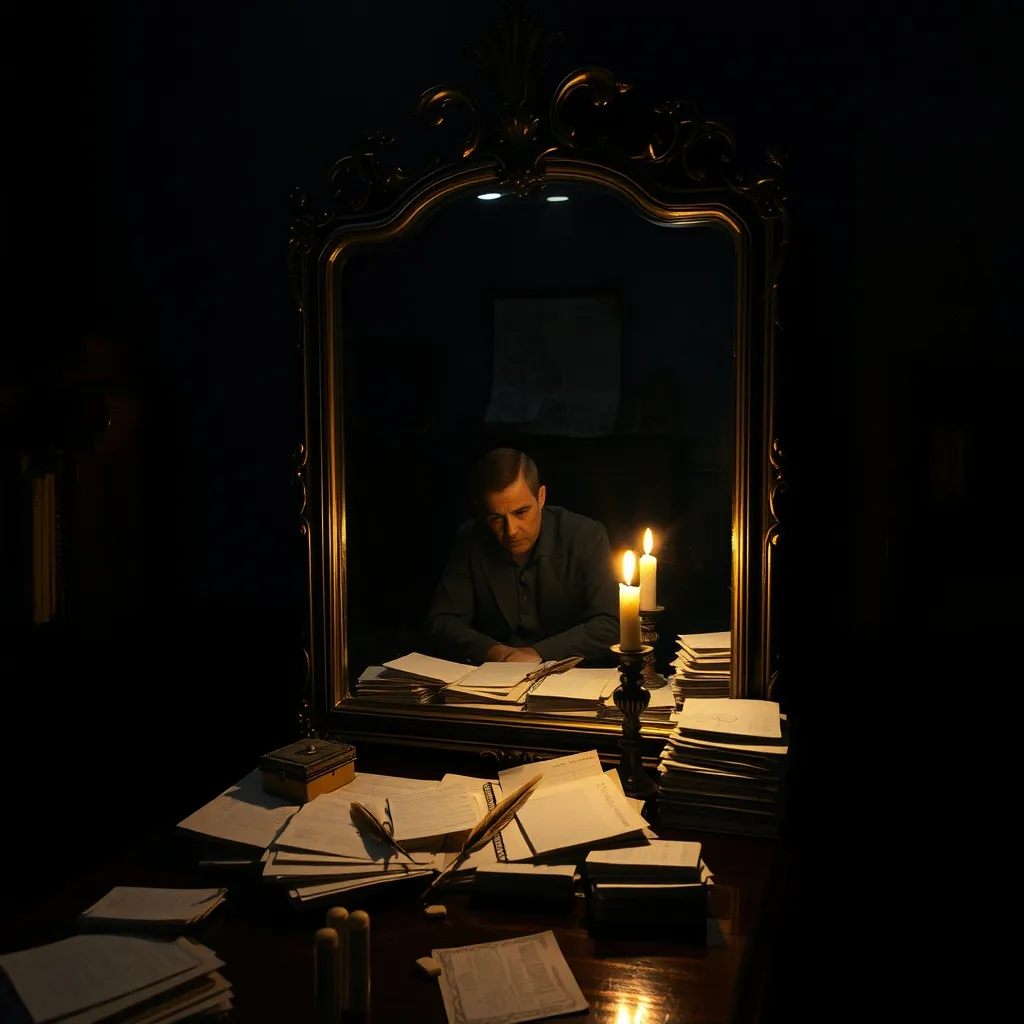
The Art of Microfiction
I've always been fascinated by the concept of microfiction, where authors manage to craft entire worlds, characters, and stories in just a handful of words. It's a daunting task, to say the least, but also an incredibly rewarding one. As a writer, I've found that microfiction forces me to be concise, to cut to the heart of the matter, and to rely on suggestion rather than exposition. It's a discipline that has improved my writing across the board, and one that I think every writer should try their hand at.
One of the key challenges of microfiction is getting the balance right between brevity and clarity. You want to convey a complete story, or at least a sense of one, in a very short space. This means that every word counts, and that you can't afford to waste a single syllable. It's a bit like writing a poem, in fact, where the sound and rhythm of the words are just as important as their meaning. But whereas poetry often has a more fluid, expressive form, microfiction needs to be tightly structured and carefully controlled.
So how do you go about writing microfiction? For me, it usually starts with a prompt or an idea, something that sparks a story or a character in my mind. From there, I try to boil the idea down to its essence, to identify the core elements that will make the story work. This might be a single image, a character trait, or a plot twist – whatever it is, I try to build the story around it, using the fewest words possible. It's a bit like solving a puzzle, where you need to find the right combination of pieces to create a complete picture.
The Power of Suggestion
One of the most important techniques in microfiction is the power of suggestion. Because you don't have room to spell everything out, you need to rely on the reader's imagination to fill in the gaps. This means using subtle hints and clues to convey information, rather than stating it outright. For example, instead of saying "the room was dark and scary," you might say "shadows crept across the walls." The first version tells the reader how to feel, while the second version shows them, and lets them draw their own conclusions.
This approach can be incredibly powerful, as it allows the reader to become an active participant in the story. By leaving some things unsaid, you create a sense of mystery and intrigue, which can be much more engaging than a straightforward, exposition-heavy narrative. Of course, it's a delicate balance – you need to give the reader enough information to follow the story, without giving too much away. But when it works, it's like a little key that unlocks the reader's imagination, and lets them into the world of the story.
The Art of Editing
Once you've written your microfiction piece, the next step is to edit it – and this is where the real work begins. Because every word counts, you need to be ruthless in your editing, cutting out anything that's not essential to the story. This can be a difficult process, as it's hard to let go of words and phrases that you've grown attached to. But the end result is worth it – a lean, mean story that gets straight to the point, without any unnecessary baggage.
For me, the editing process usually involves reading the story out loud, to see how it sounds. This helps me to identify any clunky phrases or awkward rhythms, and to get a sense of the overall flow of the story. I also try to get feedback from other writers, to see if there's anything that's not working. And of course, I revise and revise, until the story is as tight and polished as it can be. It's a bit like carving a statue – you start with a block of marble, and gradually chip away at it, until you're left with a beautiful, delicate form.
Conclusion
In the end, microfiction is all about restraint – the restraint to say only what's necessary, to convey a complete story in a very short space. It's a challenging form, to be sure, but also an incredibly rewarding one. By forcing yourself to be concise, to rely on suggestion rather than exposition, and to edit ruthlessly, you can create stories that are both powerful and elegant. And even if you're not a fan of microfiction per se, the discipline of writing in this form can improve your writing across the board, by teaching you to be more concise, more suggestive, and more controlled. So why not give it a try? You never know what you might create.
I explored a related angle in The Daily Draft if you want to keep pulling this thread.
As I look back on my own experiences with microfiction, I'm reminded of the power of this form to inspire and to challenge. It's a form that requires patience, discipline, and creativity, but the end result is well worth it. Whether you're a seasoned writer or just starting out, I encourage you to give microfiction a try – you might be surprised at what you can accomplish in just a few words. And who knows, you might just discover a new passion, one that will stay with you for the rest of your writing career.